


Last week, our team released the SSWR Conference History Database, a structured dataset of 23,793 presentations from the Society for Social Work and Research Annual Conference spanning 2005 to 2026. I described it as AI-ready, meaning the data shipped with precomputed word embeddings, clean metadata, and everything an AI assistant would need to work with.
I was wrong. Or at least, I was incomplete.
The dataset was AI-ready for people who already had the tools. If you knew how to install Python, connect to a database, and write queries against a vector store, the data was yours. But that is not the case for most social work researchers. It is not most doctoral students. It is not that most of the people who attend SSWR every January present their work and never see it cited again.
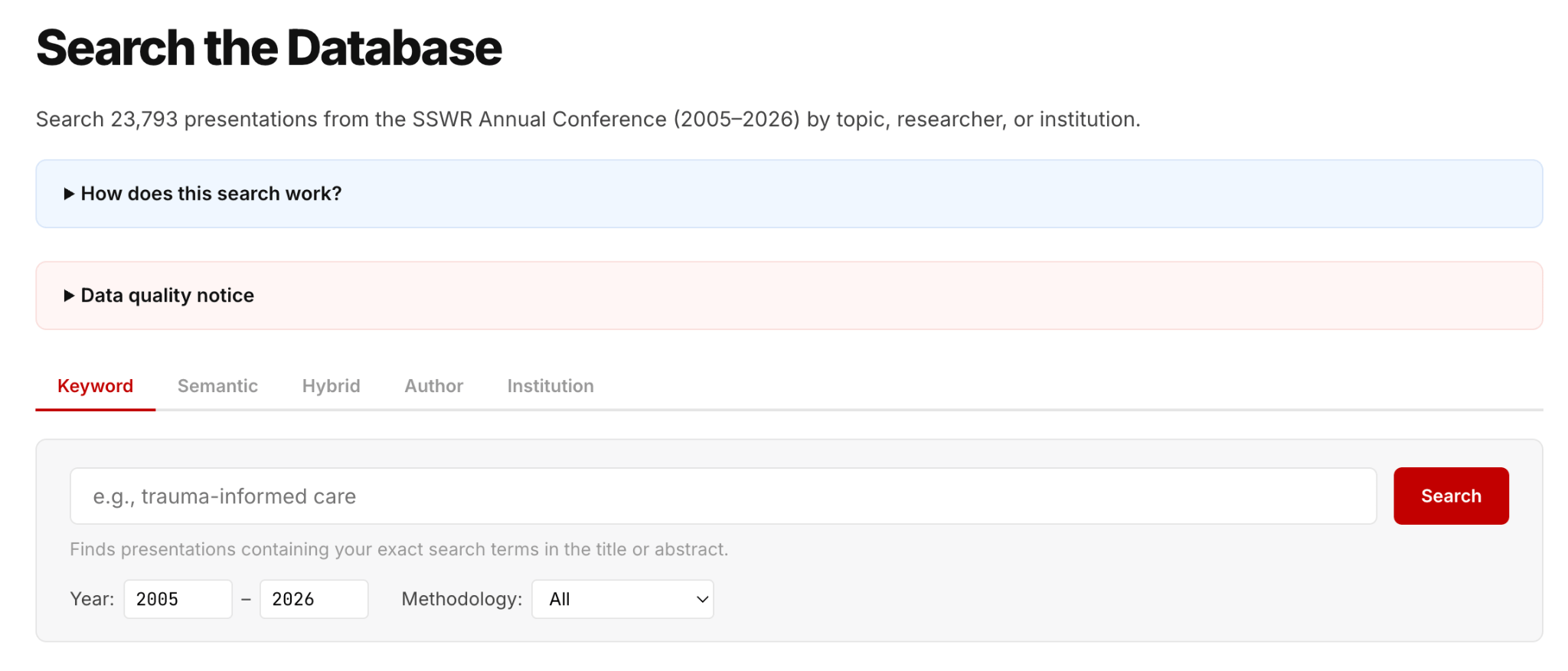
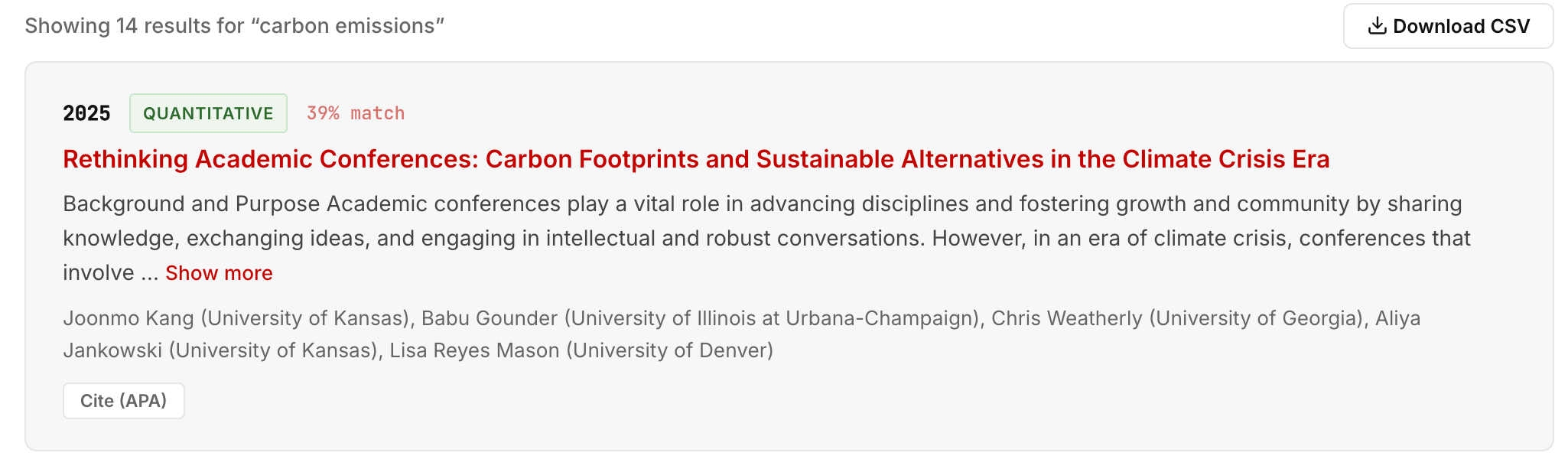
So our team went back and built what should have existed from the start: a browser-based search interface that requires no software installation, no technical knowledge, and no account. You open a web page. You type a query. You get results with one-click APA citations.
What it does
The search system offers five modes. Keyword search does what you would expect: exact term matching in titles and abstracts. Author search finds researchers by name using fuzzy matching to handle spelling variations. Institution search lets you look up presentations by university or organization.
The two modes that required more engineering are semantic search and hybrid search. Semantic search converts your natural-language query into a mathematical representation, a word embedding, and compares it against pre-computed embeddings for all 23,793 abstracts. If you search “how communities recover after natural disasters,” it surfaces papers about post-disaster resilience even if those exact words never appear. Hybrid search combines keyword precision with semantic breadth using a rank fusion algorithm, giving you the benefits of both approaches in a single result list.
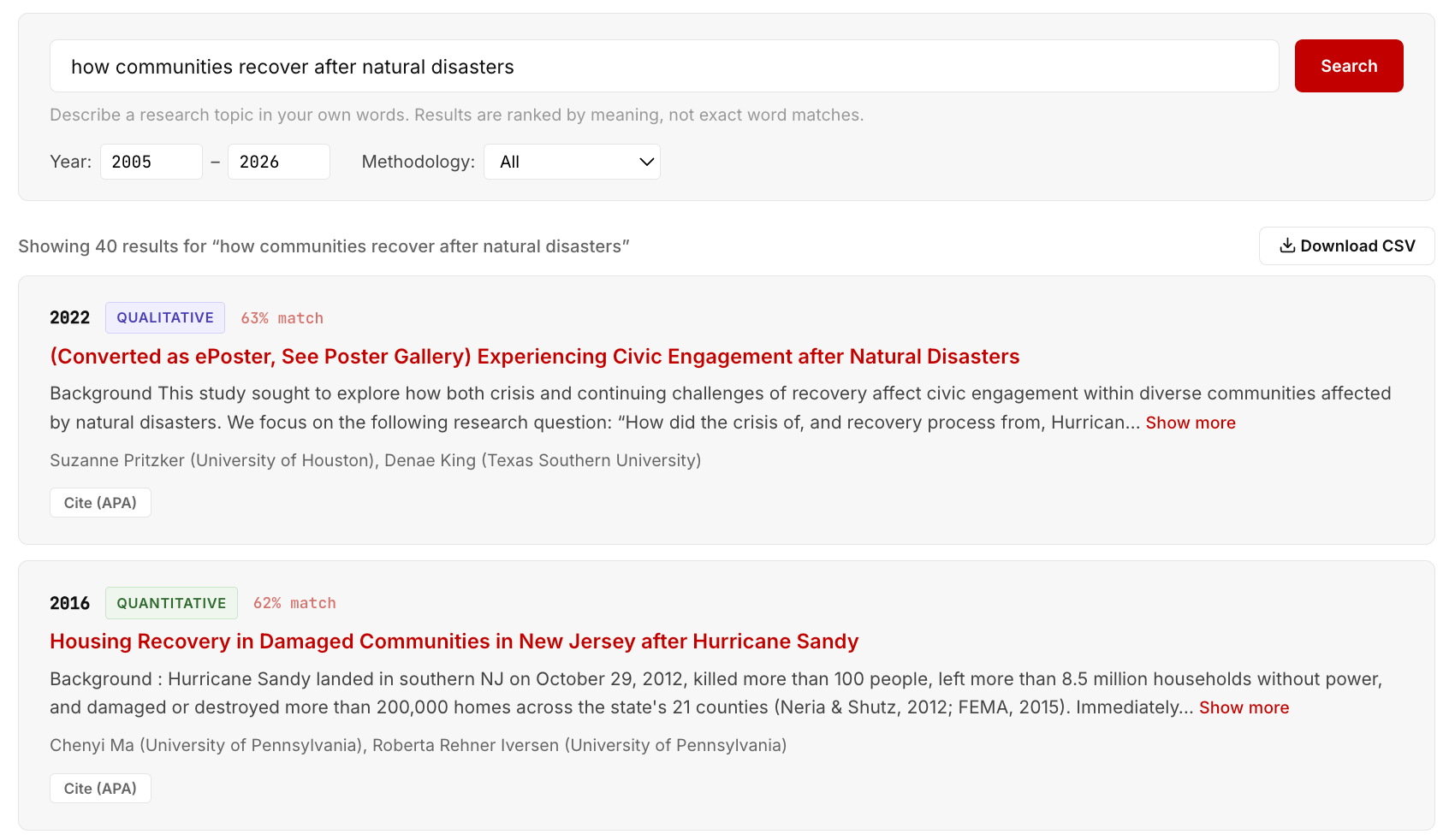
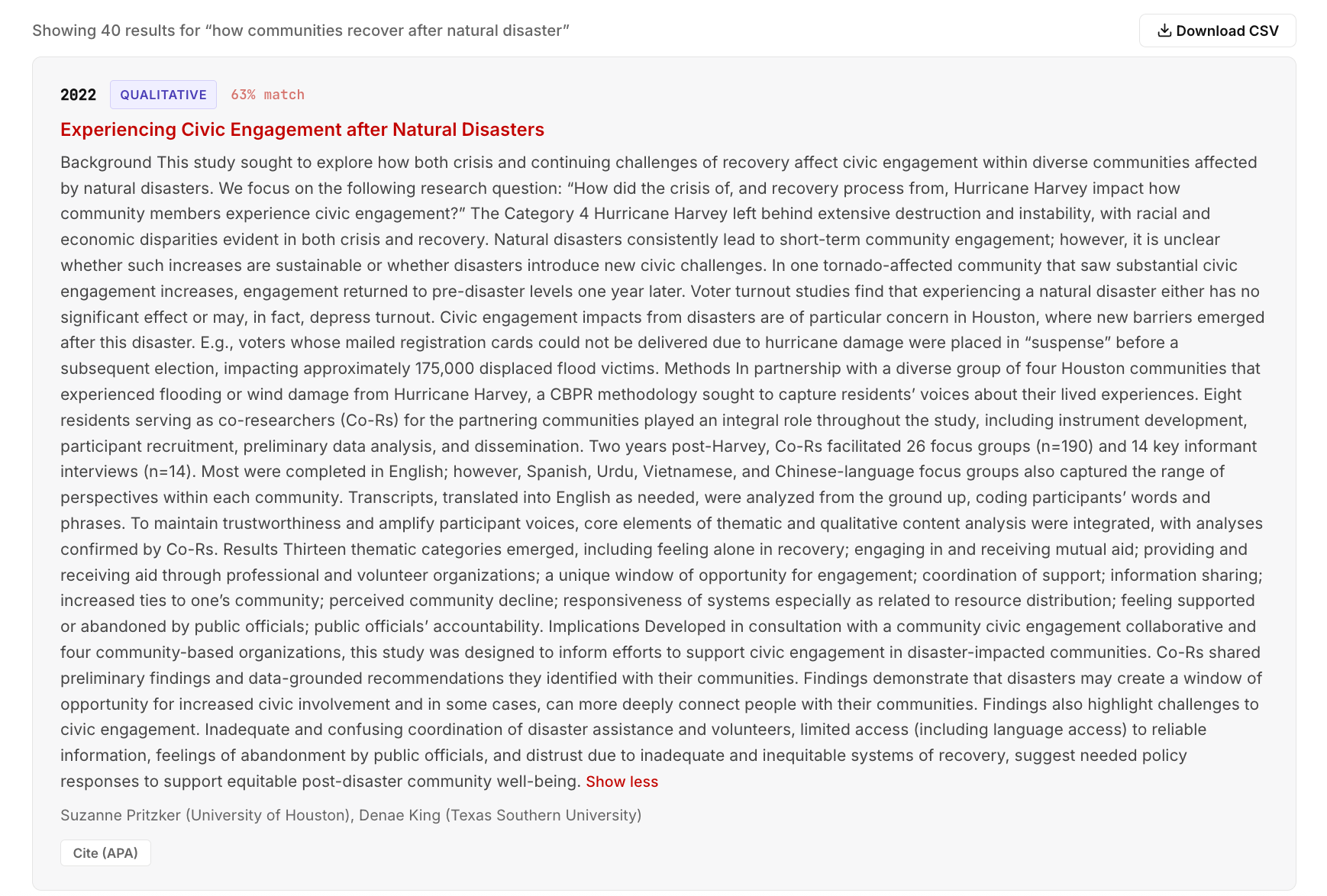
Every result includes the year, methodology, authors with their institutional affiliations at the time of presentation, a link to the original Confex page when available, and a button that copies a formatted APA 7th edition citation to your clipboard. You can filter by year range and methodology type. You can download the results as a CSV file.
This is not generative AI
Before the objections arrive, let me be direct about what this system does and does not do.
It does not generate text. It does not summarize. It does not hallucinate citations or fabricate abstracts. Every result is a real presentation from the SSWR archives, displayed exactly as it was submitted. The system uses word embeddings, which are mathematical representations of meaning developed through natural language processing research, to find conceptual matches between your query and existing abstracts. The embedding methodology is explained in a paper we published last year in the Journal of the Society for Social Work and Research. The technology predates the current wave of generative AI by years.
I raise this because I know the reflex. Any mention of AI in a research context now triggers reasonable concern about environmental costs, hype, and whether we are solving real problems or chasing trends. Those concerns are legitimate when applied to generative AI systems that consume enormous computational resources to produce text of uncertain reliability.
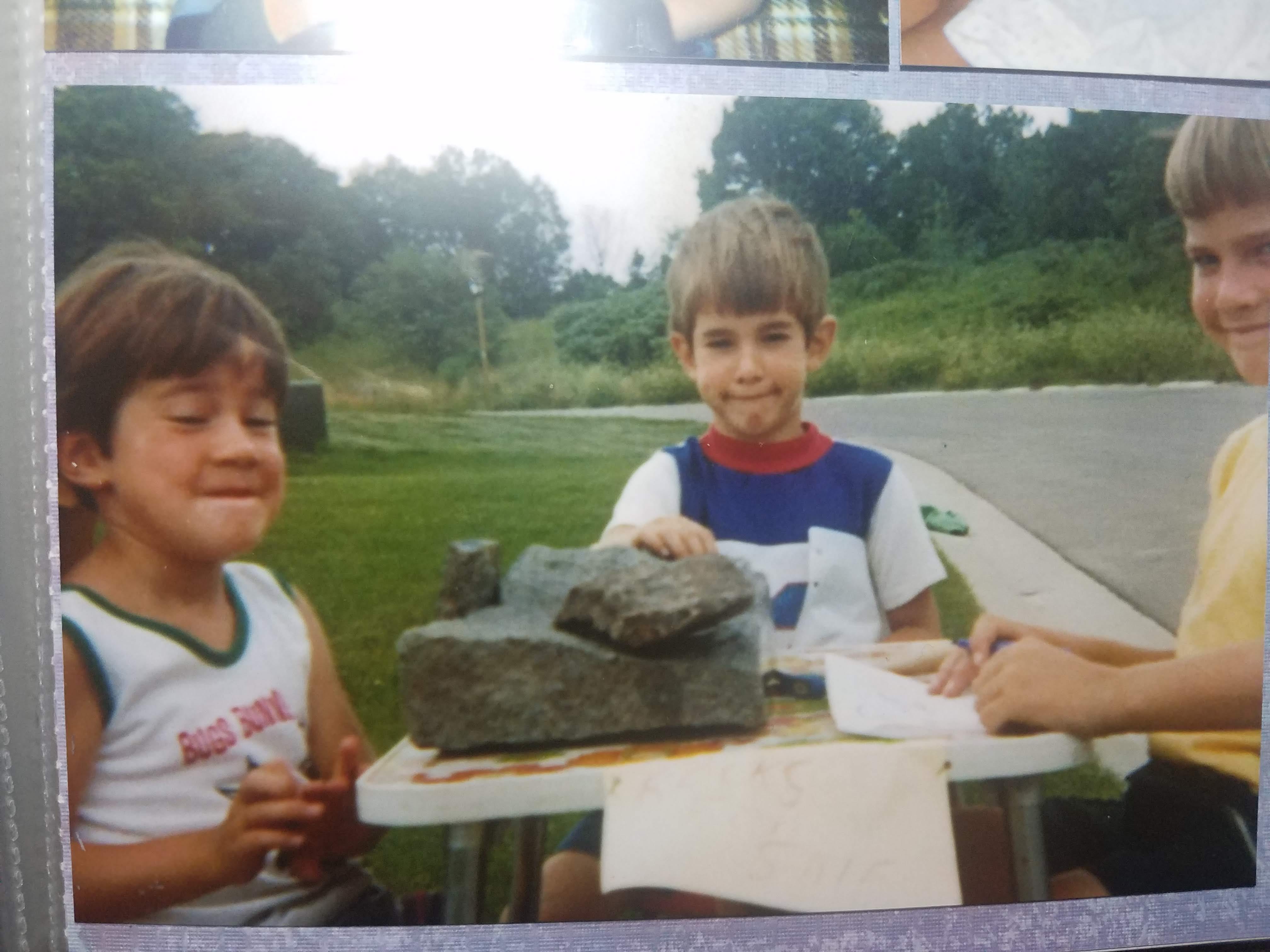
They do not apply here. A semantic search query against this database costs approximately two one-hundredths of a cent. The entire system runs on free-tier infrastructure. The embeddings were computed once. The ongoing computational footprint is negligible. The project is funded entirely from personal savings accumulated during my previous career as an independent entrepreneur, when my brothers and I specialized in selling rocks. I wish that were a joke.
The real problem this solves
Here is what should bother us. The Society for Social Work and Research has held annual conferences for nearly 30 years. Researchers have traveled across the country, paid registration fees, booked hotel rooms, prepared presentations, and shared their findings. The collective investment in this scholarship is staggering, easily hundreds of millions of dollars when you account for the research itself, the travel, the institutional support, and the carbon emissions from nearly three decades of flights and hotel stays.
And almost none of this research is cited. Conference presentations occupy a category sometimes called gray literature, not because the work lacks rigor, but because it lacks organization and indexing. A presentation delivered in 2012 about community-based interventions for opioid use disorder effectively vanishes once the conference ends. The abstract might exist somewhere on a Confex server, but no one can find it through a standard literature search. No one builds on it. The investment largely evaporates.
We have had over twenty years to organize this body of work, and we have not done it. The programs were printed, distributed, and recycled. The digital records were scattered across annual websites with no unified search, no consistent metadata, and no way to trace a researcher’s contributions across years or connect related work across sessions.
Using AI to solve this organizational problem does not qualify as hype. It qualifies as overdue infrastructure.
What AI-ready actually means
When we first released the dataset, AI-ready was defined in technical terms: structured data, clean embeddings, and documented schemas. I now think the definition needs to be broader. A dataset is not truly AI-ready if using it requires specialized software. It is AI-ready when the people who need it can reach it.
For the SSWR Conference History Database, that means a doctoral student writing a literature review can search twenty years of presentations in a single query to find who has been working in their area, instead of clicking through twenty-one separate annual conference programs on Confex. A researcher writing a grant proposal can identify potential collaborators and check whether the question has already been explored at SSWR. A faculty member can trace how a research topic has evolved across two decades of conferences, or discover that a colleague at another institution has been working on the same problem from a different angle. And anyone who needs to cite a conference presentation gets a formatted APA 7th edition reference copied to their clipboard with one click, rather than reconstructing it by hand from an old program book.
I don’t agree that AI is just hype…